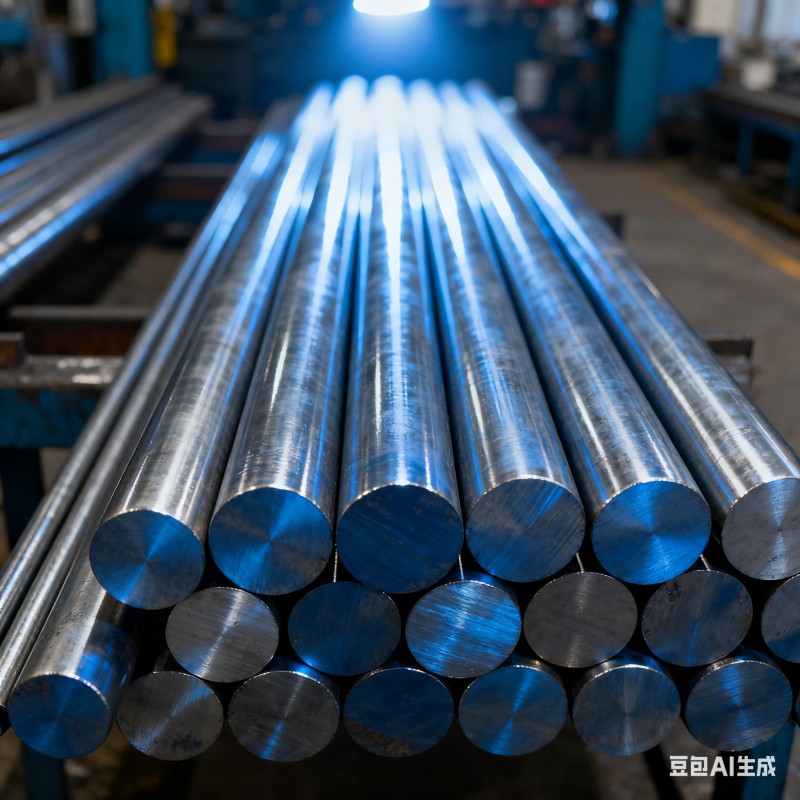
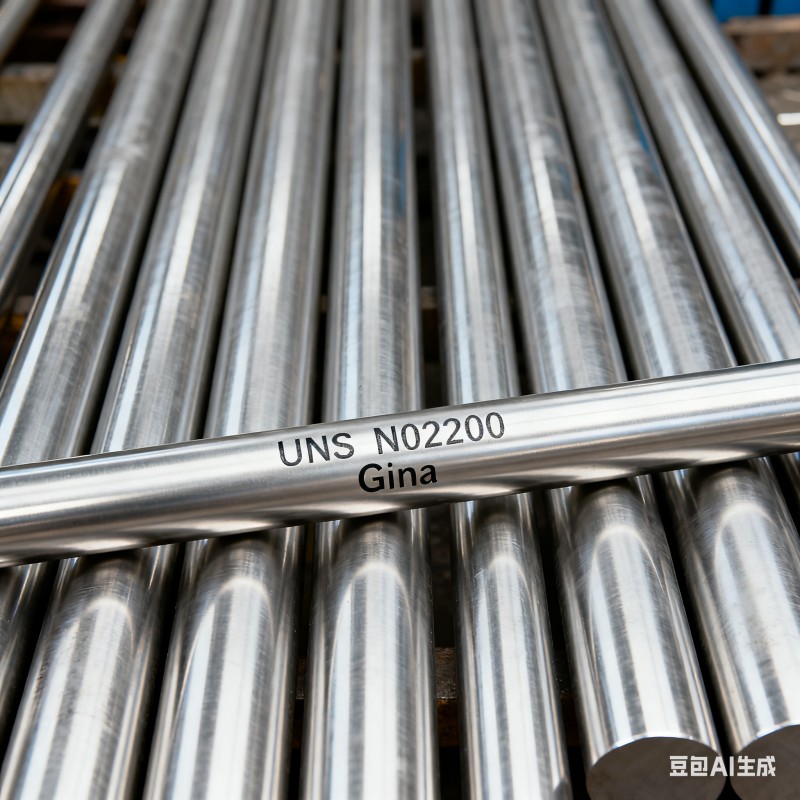
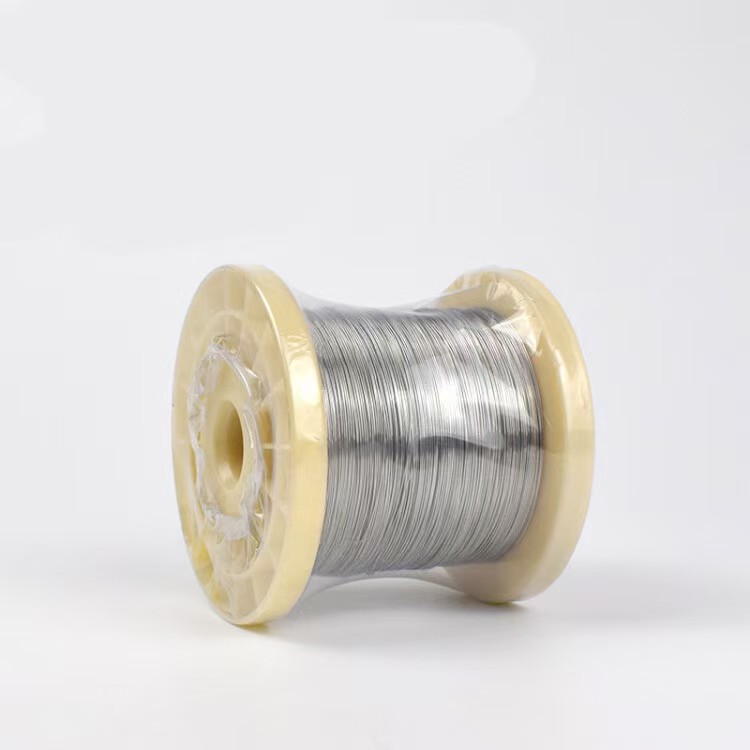
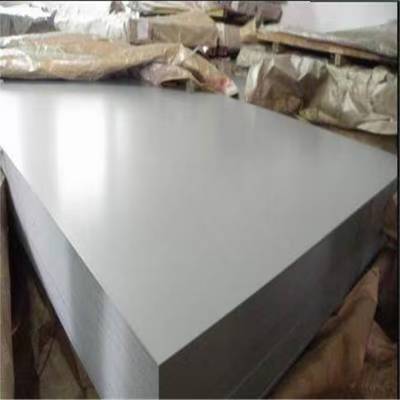
Cr20Ni80 (also known as Nickel-Chromium 80/20, UNS N06003, W.Nr 2.4869) is a technologically mature high-resistance heating alloy, characterized by stable electrothermal performance, strong high-temperature resistance, and excellent processing adaptability. Its classic nickel-chromium ratio gives it advantages in both power stability and long lifespan in heating applications, making it widely applicable to heating needs across all scenarios, from small household appliances to industrial high-temperature furnaces. It is a benchmark material in the electrothermal field.
I. Core Composition
Based on nickel and chromium as the basic components, the alloy's electrothermal performance is ensured by strictly controlling impurity content. The specific composition range is as follows (compliant with GB/T 1234-2012 standard):
- Core elements: Nickel (Ni) 76.0%-81.5%, laying the foundation for the alloy's high-temperature stability and non-magnetic properties; Chromium (Cr) 19.0%-23.0%, a key element in forming a high-temperature anti-oxidation film, directly determining corrosion resistance and high-temperature resistance.
- Impurities and limited elements: Iron (Fe) ≤1.0%, Carbon (C) ≤0.10%, Silicon (Si) 0.75%-1.60%, Manganese (Mn) ≤0.70%, Aluminum (Al) ≤0.50%, Phosphorus (P) ≤0.02%, Sulfur (S) ≤0.015%. Low impurity content avoids grain boundary embrittlement and resistivity fluctuations, while silicon helps improve oxidation resistance.
- Domestic equivalent grade: GH20, composition and performance fully meet international standards.
II. Key Performance Characteristics
(I) Core Electrothermal Performance
Stable and controllable electrothermal parameters are its core advantage as a heating element:
- Resistivity: At 20℃, it varies slightly depending on the shape and specifications. For soft wire with a nominal diameter <0.50mm, it is 1.09±0.05μΩ·m, and for >3.00mm, it is 1.14±0.05μΩ·m; for soft strip with a thickness ≤0.80mm, it is 1.09±0.05μΩ·m, and for >3.00mm, it is 1.14±0.05μΩ·m. This moderate resistivity allows for efficient heating with a small cross-sectional area.
- Temperature Coefficient of Resistance: Approximately 0.00013-0.0006/℃. The resistance value changes very little with temperature fluctuations, ensuring a constant output power of the heating equipment and avoiding sudden temperature fluctuations.
- Thermal performance parameters: Density 8.4 g/cm³, specific heat capacity 0.46 J/(g·K), thermal conductivity at 20℃ 11.3-15 W/(m·K), coefficient of linear expansion 13×10⁻⁶-16.2×10⁻⁶/℃ from 20℃ to 1000℃. Good dimensional stability under temperature changes, facilitating heating structure design.
(II) High Temperature and Oxidation Resistance
Outstanding high temperature resistance, suitable for long-term high-temperature operation:
- Temperature range: Melting point approximately 1400℃, maximum continuous operating temperature up to 1200℃, intermittent operation temperature can be briefly increased, achieving long-term stable operation within the 1000℃-1100℃ range.
- Oxidation Resistance: A dense chromium oxide protective film rapidly forms on the surface under high-temperature conditions, effectively isolating oxygen from contact with the internal alloy. It exhibits excellent resistance to sulfidation, with an extremely low corrosion rate during continuous high-temperature operation and a rapid lifespan of no less than 80 hours, far exceeding that of ordinary electrothermal materials.
- High-Temperature Mechanical Stability: Strong creep resistance at high temperatures, it is not prone to deformation or fracture, maintaining the structural integrity of the component.
(III) Mechanical and Physical Properties
Balanced Strength and Plasticity, Adaptable to Various Processing Requirements:
- Basic Mechanical Parameters: In the annealed state, tensile strength is 600-800 MPa, yield strength is approximately 350 MPa, elongation is ≥15%-20%, and hardness is HV 180-240, possessing both good strength and ductility.
- Physical Properties: The microstructure is stable austenite, non-magnetic at both room temperature and high temperatures, and can be quickly identified through magnetic detection; it has no brittle transition temperature and maintains good plasticity even at low temperatures.
(IV) Processing and Welding Performance
Highly adaptable to various processes, allowing for flexible fabrication of components in multiple shapes:
- Cold and Hot Working: Excellent cold working performance; can be produced into fine filaments, thin strips, and foils through rolling, stretching, and stamping processes. Wire diameters can be as thin as 0.1 mm, and strip thicknesses can be as thin as micrometers. Suitable hot working temperature range; plasticity can be restored through annealing after processing, facilitating subsequent shaping.
- Welding Performance: Good weldability; can be joined using various methods such as argon arc welding and resistance welding. Post-weld electrothermal performance is highly consistent with the base material, requiring no complex post-processing before use.
- Formability: Can be easily wound into complex shapes such as spirals and waves, and can also be processed into straight wires, coils, or mesh structures to adapt to the space requirements of different heating equipment.
III. Product Forms and Standards
(I) Common Forms and Specifications
A variety of forms to meet the needs of heating elements in all scenarios:
- Wire: Diameter 0.1mm-8mm, available in straight wire, coiled wire, etc., can be used directly as heating wire or wound into heating coils, suitable for household appliances and small industrial furnaces.
- Strip/Foil: Thickness 0.01mm-3.0mm, width customized according to requirements, commonly used to make heating elements and heating strips, suitable for planar heating scenarios.
- Other Forms: Can be processed into mesh, tubular heating elements and customized irregular parts, and can also be made into precision resistance wires for resistors.
IV. Typical Application Scenarios
Based on the comprehensive advantages of "stable electrothermal properties + high temperature resistance + easy processing", it covers heating needs in multiple fields:
- Industrial heating field: Core heating element for equipment such as heat treatment furnaces, glass tempering furnaces, hot air furnaces, and polycrystalline silicon reduction heating furnaces, capable of long-term stable operation at 1200℃, ensuring constant temperature requirements for industrial production.
- Home Appliances: Built-in heating wires/electrodes in electric ovens, bread makers, irons, water heaters, etc., ensuring even heating thanks to power stability, with a lifespan of thousands of hours.
- Precision Electronics: Manufacturing wire-wound precision resistors, potentiometer windings, and other resistive components; the low temperature coefficient of resistance ensures the precision of electronic circuits.
- Other Fields: Heating components in laboratory heating equipment, medical sterilization equipment, and special high-temperature heating components in the aerospace field; their non-magnetic properties also make them suitable for some precision instrument applications.