I. Chemical Composition and Metallurgical Characteristics
The chemical composition of N06601 is precisely designed:
Nickel (Ni): 58%-63%, forming a high-temperature stable framework, reducing the oxidation rate and improving resistance to hot corrosion.
Chromium (Cr): 21%-25%, forming a dense Cr₂O₃ oxide film to resist sulfide, chloride, and high-temperature oxidation corrosion.
Aluminum (Al): 1.0%-1.7%, combining with oxygen to form an Al₂O₃ oxide layer, enhancing the self-repairing ability of the oxide film.
Iron (Fe): 10%-15%, optimizing cost and improving matrix strength and toughness.
Impurity control: Carbon (C≤0.10%), Sulfur (S≤0.015%), Phosphorus (P≤0.03%), ensuring material purity and processing stability. Its microstructure is a face-centered cubic lattice structure, with grain refinement achieved through vacuum induction melting and controlled rolling and cooling processes (grain size 5-8). The γ' phase is uniformly distributed in the matrix, and carbides are dispersed along the grain boundaries.
II. Core Performance Characteristics
Ultra-high Temperature Stability
A continuous and dense Cr₂O₃-Al₂O₃ composite oxide film can be formed below 1200℃, with an oxidation rate ≤0.1 mm/year. Even under thermal cycling conditions (such as rapid cooling at 1100℃), the oxide film spalling rate is reduced by 60% compared to similar alloys.
Excellent Corrosion Resistance
Acidic media: Annual corrosion rate ≤0.05 mm in 60℃, 10% sulfuric acid solution, with significant resistance to nitric acid and phosphoric acid.
Sulfide environment: The resistance to sulfidation corrosion is 3 times that of 316L stainless steel, suitable for petrochemical cracking units.
Comprehensive Mechanical Properties
Annealed state: Tensile strength ≥650 MPa, yield strength ≥300 MPa, elongation ≥30%.
High-temperature performance: Tensile strength retention rate ≥75% at 800℃, impact energy ≥100 J at -196℃. Creep Resistance: Long-term life exceeding 200 hours at 1040℃/137 MPa, creep rupture strength of 195 MPa (1000 hours) at 600℃.
Processing and Weldability
Hot Working: Temperature range 870-1230℃, final forging temperature ≥800℃, avoid processing in the low plasticity range of 650-871℃.
Cold Forming: Annealed hardness ≤220 HB, allowing cold rolling deformation up to 30%.
Welding Process: Suitable for TIG and MIG welding, preheating temperature 150-200℃, no post-weld heat treatment required.
III. Typical Application Areas
Chemical and Petrochemical
Catalytic Reactors: Resistant to sulfur-containing oil and gas and acidic media, design life exceeding 15 years.
Polyethylene Production Equipment: Resistant to chlorine catalyst corrosion, extending maintenance cycles by 2 times.
Energy and Power
Gas Turbine Blades: Suitable for 1300℃ gas erosion environment, 30% longer lifespan than Inconel 718.
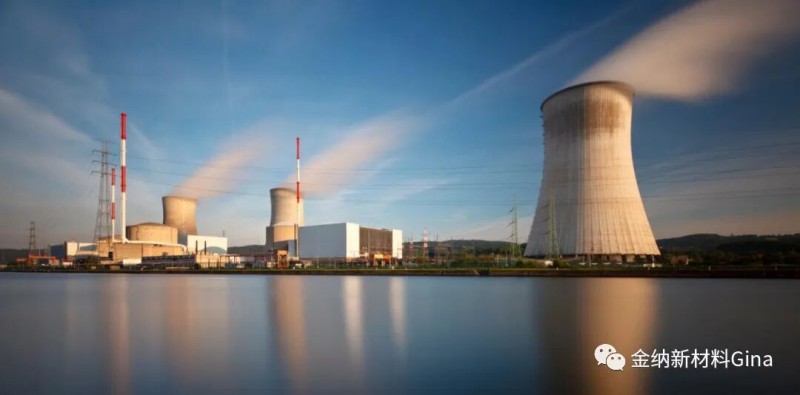
Nuclear Reactor Components: Resistant to neutron irradiation embrittlement and high-temperature water corrosion, service life exceeding 40 years.
Aerospace
Combustion Chamber Liners: Resistant to 1600℃ gas erosion, exceeding 5000 thermal shock cycles.
Jet Engine Components: Combustion chamber liners, diffuser components, meeting MIL-STD-810G standards.
Environmental Protection and New Energy
Waste Incinerator Liners: Resistant to HCl and SO₂ mixed corrosion, annual corrosion rate ≤0.1 mm.
Hydrogen Storage Tanks: Excellent hydrogen permeation resistance, hydrogen embrittlement sensitivity coefficient <0.1.
IV. Heat Treatment and Surface Strengthening
Solution Treatment
Heat to 1150-1200℃ and hold for 1-2 hours, water or air cooling, hardness controlled to ≤220 HB.
Surface Modification Technology
Aluminizing Treatment: Generates a 50-100 μm Fe-Al alloy layer, increasing oxidation resistance temperature to 1300℃. Plasma spraying: Used to prepare NiCrAlYSi coatings, resulting in a friction coefficient of ≤0.15 and a four-fold improvement in wear resistance.