I. Product Core Definition
3J21 is a deformation-strengthened, high-elasticity alloy based on cobalt, with precisely controlled proportions of chromium, nickel, and molybdenum. The "3J" designation indicates that it belongs to the category of precision elastic alloys. Its core advantages lie in its combination of high strength, high elasticity, non-magnetic properties, and excellent corrosion resistance, making it a key material for manufacturing high-end elastic components. This alloy conforms to domestic standards such as YB/T 5253 and corresponds to international grades including American Elgiloy, Russian 40KHXM, French Phynox, and Japanese NAS604PH. Its performance can be benchmarked against international standards such as GOST. It is widely used in fields with stringent material reliability requirements, such as aerospace, precision instruments, petrochemicals, and medical devices.
II. Core Composition and Microstructure
(I) Chemical Composition
3J21 has a precise composition ratio and strict control of impurities. The core element content ranges are: cobalt 39.00% - 41.00%, chromium 19.00% - 21.00%, nickel 14.00% - 16.00%, molybdenum 6.50% - 7.50%, with iron as the balance. Harmful impurities are strictly limited: carbon 0.07% - 0.12%, manganese 1.70% - 2.30%, silicon ≤0.60%, sulfur ≤0.010%, phosphorus ≤0.010%. Cobalt and nickel form the alloy matrix and ensure the basic elasticity, while chromium and molybdenum synergistically improve corrosion resistance and strength. Low impurity content avoids grain boundary defects, ensuring processing performance and performance stability. The composition can be fine-tuned under special working conditions to meet specific environmental requirements.
(II) Microstructure
In the solution-treated state, 3J21 exhibits a uniform single-phase austenitic structure with fine and regularly distributed grains. This structure gives the alloy good plasticity and processability. Prepared through a "vacuum induction melting + electroslag remelting" process, this material effectively removes gaseous impurities and inclusions, improving material purity. After high-strain-rate cold working, the grains are elongated along the deformation direction, forming a fibrous structure. Subsequent aging treatment precipitates fine strengthening phases, further optimizing the crystal structure and significantly improving strength and elastic properties, ultimately resulting in a microstructure that combines both toughness and rigidity.
III. Key Performance Indicators
(I) Core Mechanical and Elastic Properties
This is the most prominent performance advantage of 3J21. After high-strain-rate cold working and aging treatment, the tensile strength can reach over 1450 MPa, the elastic modulus is in the range of 196000 - 215500 MPa, and the shear modulus is 73500 - 83500 MPa. It exhibits minimal elastic hysteresis and aftereffect, achieving precise rebound after deformation, and has a high energy storage ratio, making it suitable for long-term stress applications. It has excellent fatigue resistance, with a fatigue life exceeding 10⁷ cycles at a stress amplitude of 600 MPa, meeting the requirements for repeated stress applications in elastic components. It also possesses a certain degree of toughness, ensuring high strength while avoiding the risk of brittle fracture.
(II) Environmental Adaptability
- Stable Non-magnetic Properties: Completely non-magnetic at room temperature, with extremely low magnetic permeability, meeting the stringent requirements for non-magnetic environments in high-frequency connectors, precision instruments, etc., avoiding magnetic field interference affecting equipment accuracy.
- Excellent Corrosion Resistance: Resistant to corrosion from various corrosive media such as nitric acid and sulfuric acid, and also performs stably in marine salt spray environments and body fluids, with a low corrosion rate, making it suitable for petrochemical pipeline components and medical device implants.
- Wide Temperature Range Stability: Can operate stably in the range of -50℃ to 400℃. At 400℃, the fluctuation rate of the elastic modulus is less than 3%, and there is no significant degradation in mechanical properties. No brittle transition occurs in low-temperature environments. (III) Physical and Other Properties
The alloy density is approximately 8.4 g/cm³, the melting point range is 1372℃ - 1405℃, and the resistivity at 20℃ is approximately 0.92 μΩ·m, possessing basic thermal and electrical conductivity. It exhibits good surface wear resistance and a low coefficient of friction, reducing wear and tear during long-term use and extending the service life of elastic components; it also has good impact resistance, able to withstand instantaneous impact forces during assembly and use.
(IV) Processing and Heat Treatment Properties
- Processing Performance: In the solid solution state, it has good plasticity, allowing for smooth cold and hot working processes such as forging, rolling, and drawing. It can be manufactured into various forms such as wires, strips, rods, plates, and tubes, with dimensional accuracy reaching the micron level after processing. Cold working can significantly improve strength, but the processing rate needs to be controlled to avoid cracking; it is compatible with welding processes such as TIG welding, but parameters need to be controlled during welding to avoid overheating and oxidation, and the weld strength can match the base material performance.
- Heat Treatment Performance: The strengthening process requires a three-step collaboration: "solid solution treatment - cold working - aging treatment": solid solution treatment involves heating at 950 - 1200℃ followed by rapid cooling to obtain a uniform austenitic structure; after 30% - 70% cold strain, aging treatment is performed at 300 - 650℃ for 4 - 8 hours followed by air cooling to precipitate strengthening phases and achieve performance improvement. In addition, stress relief annealing can be performed at 500 - 600℃ to remove internal processing stresses and stabilize dimensions. IV. Main Product Forms and Specifications
3J21 offers a full range of precision product forms to meet the manufacturing needs of elastic components in different applications:
- Wire: Diameter 0.1 - 5.0mm (cold-drawn), with high surface finish, suitable for instrument tension wires, hairsprings, mainsprings, and other small elastic components;
- Strip: Thickness 0.1 - 3.5mm (cold-rolled), customizable width, used for diaphragms, spring plates, and other flat elastic components;
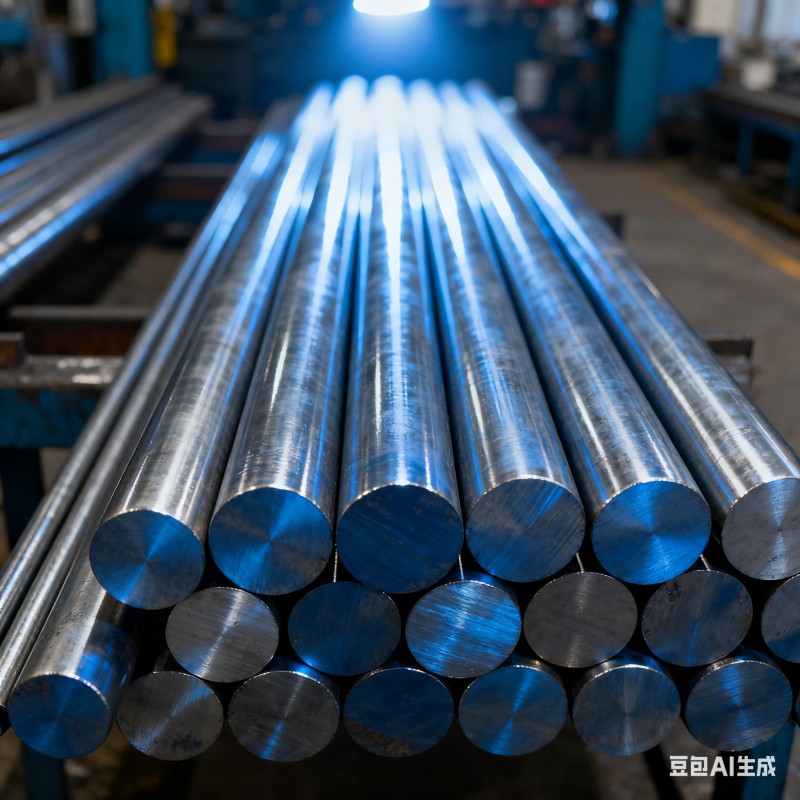
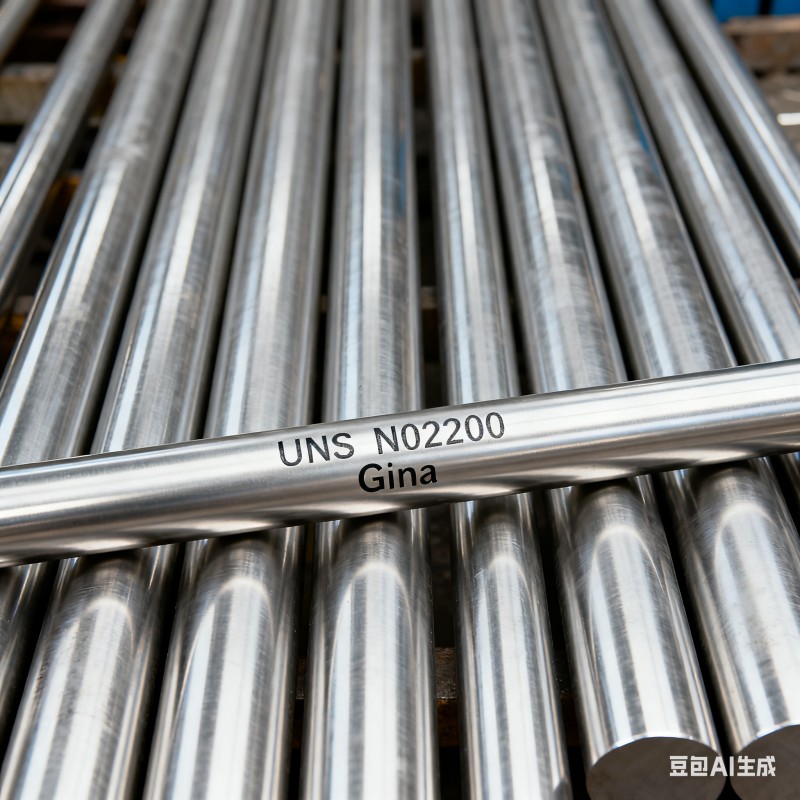
- Rod: Diameter 5.0 - 180.0mm, of which 5.0 - 8.0mm is cold-drawn, 8.0 - 30.0mm is hot-rolled, and 30.0 - 180.0mm is hot-forged, suitable for shaft tips, valve cores, and other cylindrical elastic structures;
- Plate and Tube: Plate thickness 3 - 50mm, tube outer diameter 1 - 50mm, wall thickness 0.1 - 5mm, used for large elastic components and elastic components for fluid control.
All products undergo rigorous heat treatment processes to ensure uniform and stable performance across different batches.
V. Typical Application Scenarios
(I) Aerospace Field
Used in the manufacture of key components such as gyroscope tension wires for spacecraft attitude control systems, engine seals, and aircraft instrument springs. Its high elasticity and fatigue resistance ensure precise operation of equipment in extreme temperature differences and high-stress environments; it can also be used to make special bearing elastic components for spacecraft, adapting to the non-magnetic and alternating high and low temperature environments of space.
(II) Precision Instruments Field
It is the core material for watch mainsprings, precision instrument hairsprings, and pressure sensor diaphragms. Its non-magnetic properties prevent magnetic field interference with measurement accuracy, and low elastic hysteresis ensures data accuracy; it is also used in elastic contacts for high-frequency connectors in electronic equipment, ensuring stable signal transmission.
(III) Petrochemical and Marine Engineering
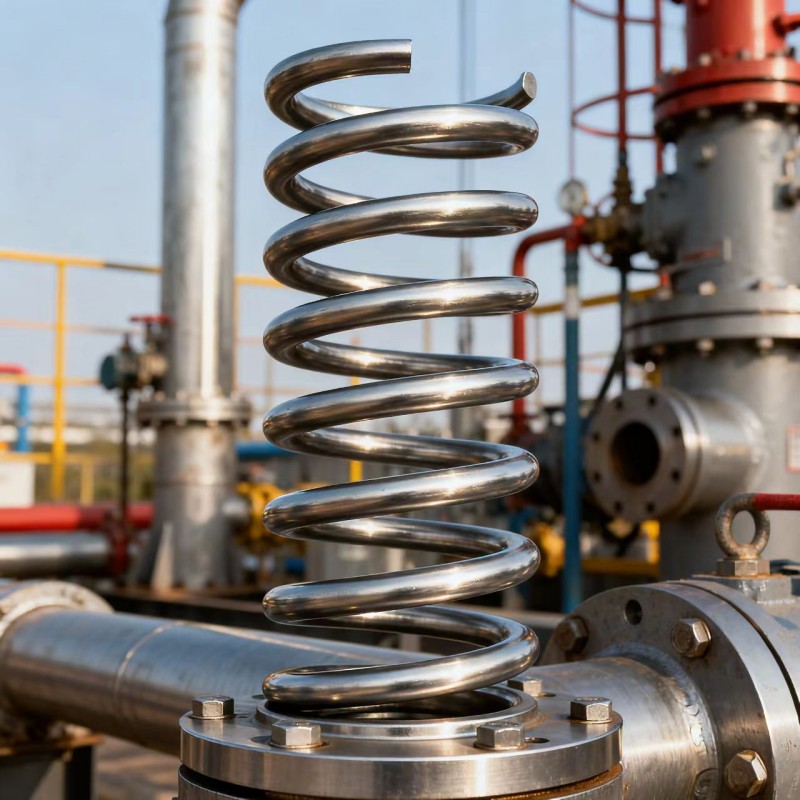
Used in the manufacture of corrosion-resistant valve elastic components, pipeline pressure monitoring springs, etc. Its resistance to acid, alkali, and salt spray corrosion makes it suitable for the harsh corrosive environments of oil and gas extraction and marine equipment, extending equipment maintenance cycles. (IV) Medical Device Field
Used in elastic components of surgical forceps, elastic structures of implantable medical devices, etc., exhibiting excellent resistance to body fluid corrosion and good biocompatibility. Its non-magnetic properties make it suitable for use with medical imaging equipment and surrounding devices, and it complies with industry standards such as ISO 13485.
VI. Key Points for Use and Maintenance
- Before processing, ensure the material is in a solid solution state to obtain optimal plasticity. After cold working, aging treatment must be performed promptly to avoid insufficient performance or dimensional instability;
- Welding should use low heat input processes such as TIG welding. Stress relief annealing is recommended after welding to prevent performance degradation in the welded area;
- When used in highly corrosive environments, surface coating or passivation treatment can further enhance corrosion resistance and extend service life;
- Storage should be in a dry and ventilated environment, avoiding contact with corrosive substances such as acids and alkalis to prevent surface oxidation from affecting processing performance;
- Heat treatment should be carried out in a protective atmosphere or vacuum environment to avoid oxidation or decarburization. Strict control of temperature and holding time is necessary to ensure stable strengthening effects.