I. Product Core Definition
4J29 is an iron-based, precisely alloyed iron-nickel-cobalt low-expansion precision alloy, also known as Kovar Alloy. The "4J" designation indicates that it belongs to the category of precision expansion alloys. Its core advantage is its high thermal expansion coefficient match with materials such as borosilicate glass and alumina ceramics, making it a core material for achieving hermetic sealing in electro-vacuum devices and precision electronic equipment. This alloy conforms to the domestic standard YB/T 5231-2014 and corresponds to a variety of international grades, including US UNS K94610 (Kovar), German Werkstoff Nr. 1.3981, and Japanese KV-1. Its performance can be benchmarked against international standards such as ASTM F15 and MIL-I-23011. It is widely used in electronics, aerospace, and precision instruments, where reliable sealing and environmental stability are critical.
II. Core Composition and Microstructure
(I) Chemical Composition
4J29 has a precise composition ratio and strict control of impurities. The core element content ranges are: nickel 28.5% - 29.5%, cobalt 16.8% - 17.8%, with iron as the balance. Harmful impurities are strictly limited: carbon ≤0.03%, silicon ≤0.3%, manganese ≤0.4%, phosphorus ≤0.02%, and sulfur ≤0.02%. The specific ratio of nickel and cobalt is crucial for achieving a precise match in thermal expansion coefficient; they synergistically regulate the lattice thermal response of the alloy. Low impurity content prevents the formation of grain boundary precipitates, ensuring the alloy's toughness, processability, and sealing stability. Under special working conditions, trace alloying elements can be fine-tuned to further optimize corrosion resistance or welding performance.
(II) Microstructure
In the standard annealed state, 4J29 exhibits a uniform face-centered cubic (FCC) crystal structure with fine and regularly distributed grains, without significant segregation or structural defects. This structure ensures the consistency of thermal expansion performance, laying the microscopic foundation for sealing compatibility. Prepared through vacuum induction melting, the material effectively removes gaseous impurities and inclusions, improving material purity. Annealing at 850℃ - 900℃ for 1-2 hours followed by slow cooling further eliminates internal processing stresses and optimizes crystal structure uniformity, ensuring consistent performance across different batches.
III. Key Performance Indicators
(I) Core Sealing Performance: Thermal Expansion Matching and Airtightness
This is the core performance advantage of 4J29. The average linear thermal expansion coefficient in the 20℃ - 450℃ range (the core temperature range for sealing and use) is approximately 4.6×10⁻⁶/℃, which closely matches the thermal expansion coefficients of borosilicate hard glasses such as Corning 7052 and Schott 8367, as well as 95% alumina ceramics. This prevents stress cracks at the seal due to differential thermal expansion and contraction during temperature changes. Simultaneously, a dense oxide film (mainly composed of Fe₃O₄, NiO, and Co₃O₄) easily forms on the alloy surface, which is well wetted by glass. The sealing strength is ≥20MPa, and the airtightness can reach 1×10⁻¹¹Pa·m³/s, meeting the sealing requirements of high-vacuum devices.
(II) Mechanical Properties: Balance of Strength and Ductility
The alloy's mechanical properties balance load-bearing capacity and formability. In the annealed state, the yield strength is ≥319MPa, the tensile strength is ≥462MPa, the elongation is ≥35%, and the hardness is HV150-200. It possesses good impact toughness and fatigue strength, and can withstand mechanical stress during device assembly and use. Cold deformation can further improve strength (tensile strength can reach 600-800MPa after cold deformation), adapting to the differentiated mechanical property requirements of different scenarios. After processing, annealing can restore ductility and eliminate internal stress. (III) Environmental Stability: High and Low Temperature Resistance and Corrosion Resistance
- Excellent low-temperature stability: Maintains a face-centered cubic structure even in ultra-low temperature environments of -196℃, with no risk of martensitic transformation or brittle fracture. No significant changes in structure or dimensions were observed after 4 hours of freezing at -78.5℃, making it suitable for extreme low-temperature scenarios such as space and deep-sea environments;
- Good high-temperature resistance: Maintains stable mechanical properties at 500℃, with tensile strength ≥450MPa and no sudden changes in the coefficient of thermal expansion, making it suitable for the temperature rise environment during the operation of electronic devices;
- Reliable corrosion resistance: Corrosion rate is ≤0.01mm/year in dry air and neutral salt spray environments at room temperature, and it does not react chemically with mercury, making it suitable for special applications such as mercury-containing discharge instruments and shipborne radar, ensuring service life without additional anti-corrosion treatment.
(IV) Processing and Joining Performance
- Processing performance: Good thermoplasticity, with a hot working temperature range of 1100℃ - 900℃, allowing for uniform deformation through processes such as forging, rolling, and extrusion; excellent cold working performance, supporting cold rolling, cold drawing, and cold stamping processes, enabling the processing of complex-shaped precision parts. Dimensional accuracy after processing can reach the micron level, meeting the precision assembly requirements of electronic devices; good machinability, with a recommended fine turning speed of approximately 20 meters/minute to avoid excessive tool wear.
- Welding performance: Compatible with various welding processes such as TIG welding, electron beam welding, and resistance welding, resulting in good weld formation and strength exceeding 85% of the base material; appropriate heat treatment after welding can eliminate welding internal stress, prevent performance degradation in the heat-affected zone, and ensure the sealing and stability of the overall structure.
(V) Other Key Performance Characteristics
The alloy density is approximately 8.3 g/cm³, the melting point is 1435℃ - 1446℃, and the resistivity at 20℃ is approximately 0.48 µΩ·m, possessing certain thermal and electrical conductivity; it exhibits ferromagnetism at room temperature and has high magnetic permeability, which can reduce electromagnetic interference and ensure signal stability for devices such as microwave tubes and radar. IV. Main Product Forms and Specifications
4J29 offers a full range of precision product forms to meet the processing needs of different applications:
- Wire: Diameter 0.05 - 5mm (cold drawn), with high surface finish, mainly used for electronic component leads and pins;
- Strip/Sheet: Strip thickness 0.03 - 3mm, sheet thickness 3 - 50mm, customizable width, suitable for shielding covers, gaskets, and precision structural parts;
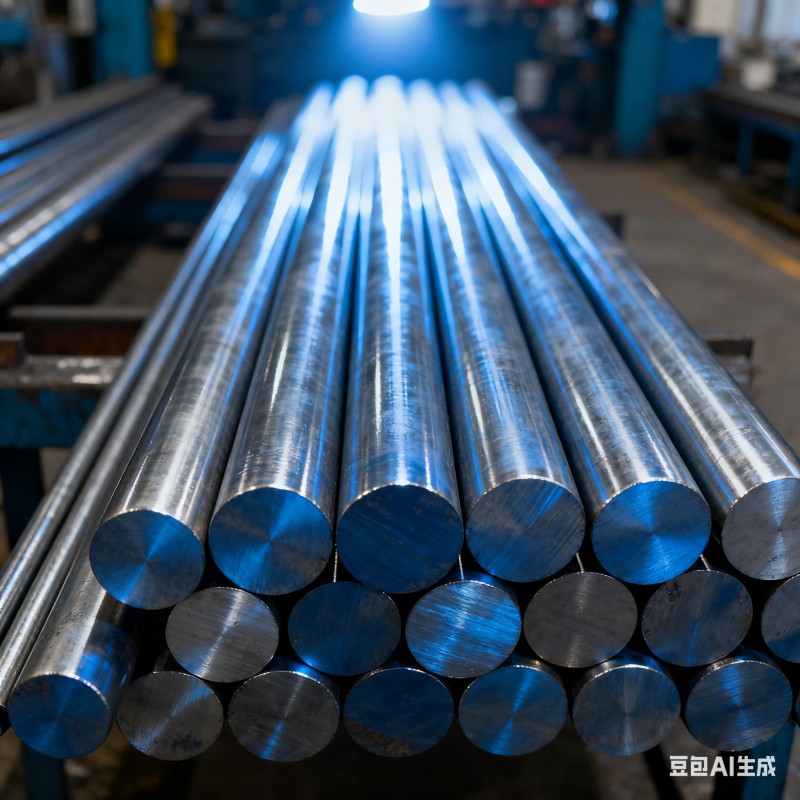
- Bar: Diameter 5 - 100mm (hot rolled/cold drawn), used for processing precision shafts, valve cores, and other components;
- Tube: Outer diameter 1 - 50mm, wall thickness 0.1 - 5mm, high dimensional accuracy, suitable for vacuum pipelines, sealing sleeves, etc.;
- Forgings: Customizable for large and complex shapes, used for heavy-duty precision structural parts in the aerospace field.
All products undergo strict heat treatment (annealing temperature 850℃ - 900℃, holding for 1-2 hours and slow cooling) to ensure uniform and stable performance.
V. Typical Application Scenarios
(I) Electronics and Vacuum Technology
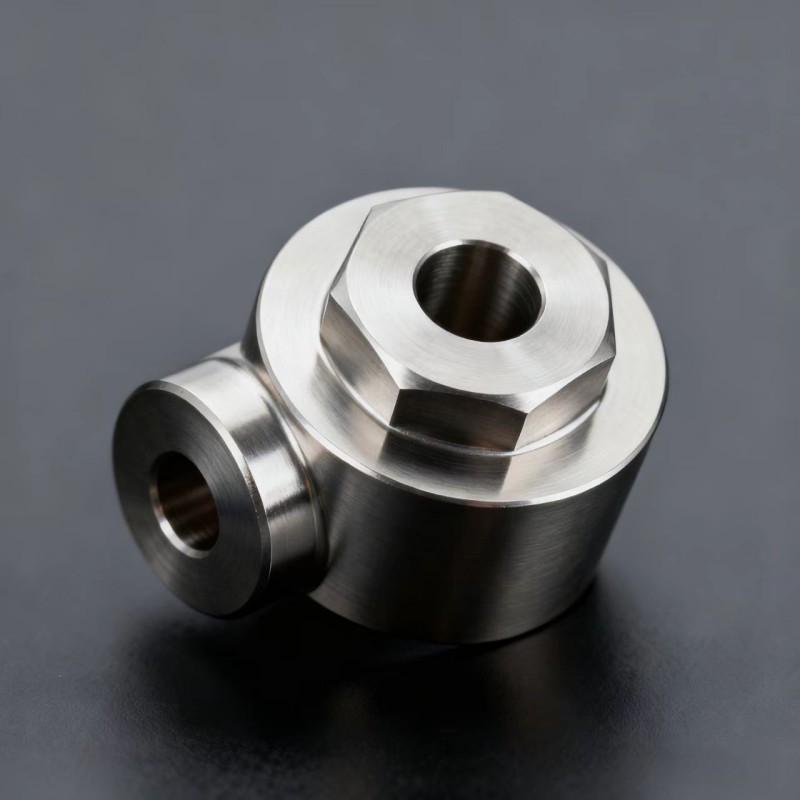
It is a core sealing material for devices such as transmitting tubes, transistors, integrated circuits, vacuum capacitors, and cathode ray tubes, used to manufacture leads, pins, housings, and sealing rings. Through precise sealing with glass/ceramics, it ensures the airtightness and long-term working stability of the devices; it is also used in sealing connectors for fiber optic communication devices, solving the vacuum sealing problem of optical modules.
(II) Aerospace and Defense
Used in the manufacture of gyroscopes for spacecraft attitude control systems, precision components for navigation systems, and satellite electronic equipment housings. In the extreme temperature difference environment of space (-196℃ to above 100℃), its low expansion characteristics ensure dimensional accuracy and sealing reliability; it can also be used to manufacture sealing components for shipborne radar and missile guidance systems, withstanding marine salt spray and alternating high and low temperature environments. (III) Precision Instruments and Optics
Used in the support structures and sealed housings of optical instruments such as telescopes and microscopes, reducing the impact of temperature changes on optical precision; in measuring instruments, it can serve as a core component of precision sensors, ensuring the accuracy of measurement data.
(IV) Other Special Fields
Used in mercury-containing discharge instruments, vacuum switches, high-temperature vacuum furnace seals, etc., utilizing its non-reactivity with mercury and resistance to high temperatures and vacuum to extend the service life of the devices; it can also be used as a reinforcing framework for composite materials, improving the dimensional stability of the composite materials.
VI. Key Points for Use and Maintenance
- Before sealing, the alloy surface needs to be degreased and acid-etched to remove oil and oxide scale, ensuring wettability with glass/ceramics and improving sealing strength;
- During processing, control the heating rate and cooling method to avoid excessive thermal stress leading to deformation. Annealing treatment must be performed after cold working to eliminate internal stress and stabilize dimensions;
- For welding, prioritize low heat input processes (such as electron beam welding), and perform heat treatment promptly after welding to prevent changes in the thermal expansion coefficient in the weld area from affecting sealing performance;
- When used in humid and corrosive environments, it is recommended to perform electroplating (such as nickel plating, gold plating) or apply a protective coating to further enhance corrosion resistance;
- When storing, it should be placed in a dry and ventilated environment, avoiding contact with corrosive substances such as acids and alkalis, to prevent surface oxidation from affecting subsequent processing and use.