I. Product Core Definition
4J32 is a low-expansion precision alloy based on iron, containing key elements such as nickel and cobalt. Its core characteristic is a lower thermal expansion coefficient than conventional Invar alloys within a specific temperature range, hence it is also known as Super-Invar. The "4J" in its designation represents the precision expansion alloy category. Its composition is designed to optimize low-expansion performance through the synergistic effect of nickel and cobalt, making it a core material for ensuring dimensional stability in extreme environments in high-end precision manufacturing. This alloy conforms to domestic standards such as YB/T 5241-2005, and its corresponding international designation is ASTM F1684 UNS K93500. Its performance can be compared to AMS 5731 and ASTM B164 in the US and Chinese standard systems, making it widely suitable for applications requiring strict dimensional accuracy, such as aerospace, precision instruments, and electronic communications.
II. Core Composition and Microstructure
(I) Chemical Composition
4J32 is a ternary iron-nickel-cobalt alloy with precise composition and strict impurity control: nickel content is typically between 31% and 33%, cobalt content is approximately 4% to 5%, and iron is the remainder. Carbon content is limited to ≤0.05%, silicon ≤0.3%, phosphorus ≤0.02%, and sulfur ≤0.02%. The specific ratio of nickel and cobalt is crucial for achieving ultra-low expansion performance; their synergistic effect precisely controls the alloy's crystal thermal response characteristics. Strict control of impurity elements prevents the formation of precipitated phases, reduces structural defects, and ensures processing performance and dimensional stability. Under special working conditions, the content of elements such as molybdenum and copper can be fine-tuned to further optimize corrosion resistance or high-temperature performance.
(II) Microstructure
In the standard heat-treated state, 4J32 exhibits a uniform face-centered cubic (FCC) crystal structure with fine and regularly distributed grains. This structure effectively counteracts the lattice expansion effect caused by temperature changes, which is the microscopic basis for its low-expansion performance. Through a secondary melting process combining vacuum induction melting and electroslag remelting, the grain boundaries can be further purified, inclusions reduced, and organizational uniformity improved. The synergistic control of cold deformation and annealing treatment optimizes grain size, resulting in a more stable expansion coefficient. Even after 300 thermal cycles from -50℃ to +500℃, the crystal structure remains intact, with dimensional changes not exceeding 0.01%.
III. Key Performance Indicators
(I) Core Thermal Performance: Extremely Low Expansion and Temperature Adaptability
This is the most prominent performance advantage of 4J32. It exhibits an extremely low expansion coefficient in the range of -60℃ to 80℃, with an average linear expansion coefficient of only about 0.4×10⁻⁶/℃ in the 30℃ - 100℃ range, significantly lower than the 0.9×10⁻⁶/℃ of 4J36 alloy. Its Curie point is approximately 200℃ - 230℃; below this temperature, it maintains ferromagnetism and low expansion characteristics, while above this temperature, the expansion coefficient increases significantly. Although its low-temperature structural stability is slightly inferior to 4J36, it can still achieve near-"zero deformation" dimensional control within the temperature fluctuation range of conventional precision manufacturing.
(II) Mechanical Properties: Balanced Strength and Toughness
The alloy's mechanical properties balance load-bearing capacity and formability. In the annealed state, the tensile strength can reach 550 - 700MPa, the yield strength is ≥280MPa, the elongation exceeds 40%, and the hardness is HV200 - 250. It has a high elastic modulus (approximately 140GPa) with a narrow fluctuation range, resulting in small deformation under load and excellent elastic recovery characteristics, making it suitable for dynamic load environments. Cold deformation can further improve strength to meet the differentiated needs of mechanical properties in different scenarios. After processing, annealing treatment can restore plasticity and eliminate internal stress. (III) Processing Performance: Adapted to Precision Forming Requirements
- Melting Process: Utilizing a "vacuum induction melting + electroslag remelting" secondary melting technology, the process allows for precise control of composition and removal of impurities, significantly improving material purity and structural uniformity, laying the foundation for subsequent processing.
- Hot and Cold Working: Exhibits good thermoplasticity, with a hot working temperature range of 1100℃ - 900℃, allowing for uniform deformation through forging and rolling; excellent cold working performance, supporting processes such as cold rolling, cold drawing, and cold stamping, enabling the processing of complex-shaped parts. However, cold deformation can easily lead to work hardening, requiring intermediate annealing at 700℃ - 750℃ to restore plasticity.
- Welding Performance: Can be joined using low heat input processes such as laser welding and TIG welding. Laser welding achieves high-precision, low-deformation welding results, effectively avoiding performance degradation in the heat-affected zone. Post-weld heat treatment is required to optimize weld quality.
(IV) Other Properties: Adapted to Multiple Scenario Requirements
Exhibits good corrosion resistance in dry environments at room temperature. Surface treatment technologies such as plating and oxidation can further enhance wear resistance and corrosion resistance, making it suitable for humid or mildly corrosive conditions. It possesses a certain magnetic permeability, stable electromagnetic properties at low temperatures, meeting the electromagnetic compatibility requirements of some electronic and communication equipment. It has a density of approximately 8.1 g/cm³ and a melting point of approximately 1450℃, and possesses basic thermal and electrical conductivity. IV. Main Product Forms and Specifications
4J32 offers a full range of precision product forms to meet the processing needs of different applications:
- Plates: Thickness 0.2 - 30mm, customizable width, precision ground surface, suitable for optical structural components, precision shielding covers, etc.;
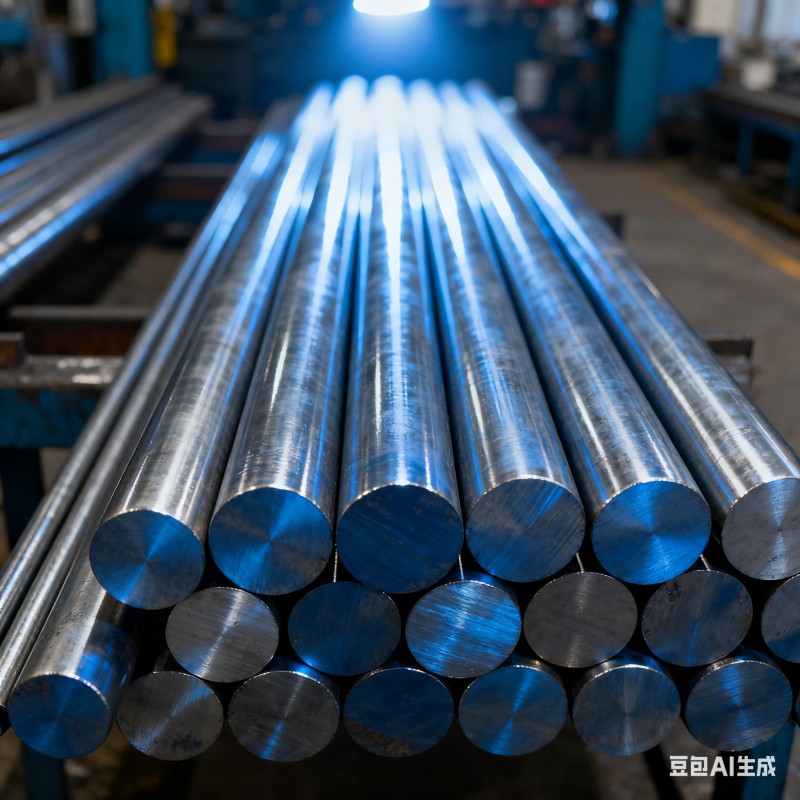
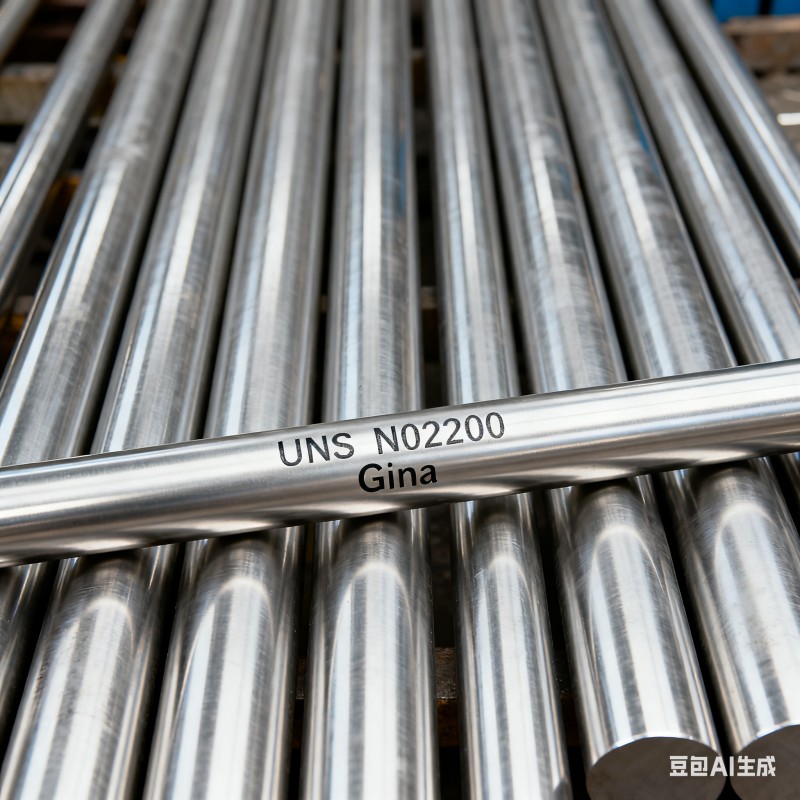
- Rods and Wires: Rod diameter 5 - 180mm (cold drawn/hot rolled/hot forged), wire diameter 0.1 - 5mm (cold drawn), used for processing precision shafts, lead frames, etc.;
- Strips and Flat Wires: Strip thickness 0.1 - 3.5mm, flat wire specifications 0.5 - 5mm, suitable for bimetallic passive layers, resonant cavities, and other small precision components;
- Tubes and Forgings: Tube outer diameter 1 - 120mm, precise wall thickness control; forgings can be customized for large and complex shapes, suitable for heavy-duty precision structural components in aerospace applications.
All products strictly follow the heat treatment process: semi-finished products are water quenched after holding at 840℃±10℃ for 1 hour, and finished products are furnace-cooled or air-cooled after holding at 315℃±10℃ for 1 hour to ensure stable and consistent performance.
V. Typical Application Scenarios
(I) Precision Instruments and Metrology
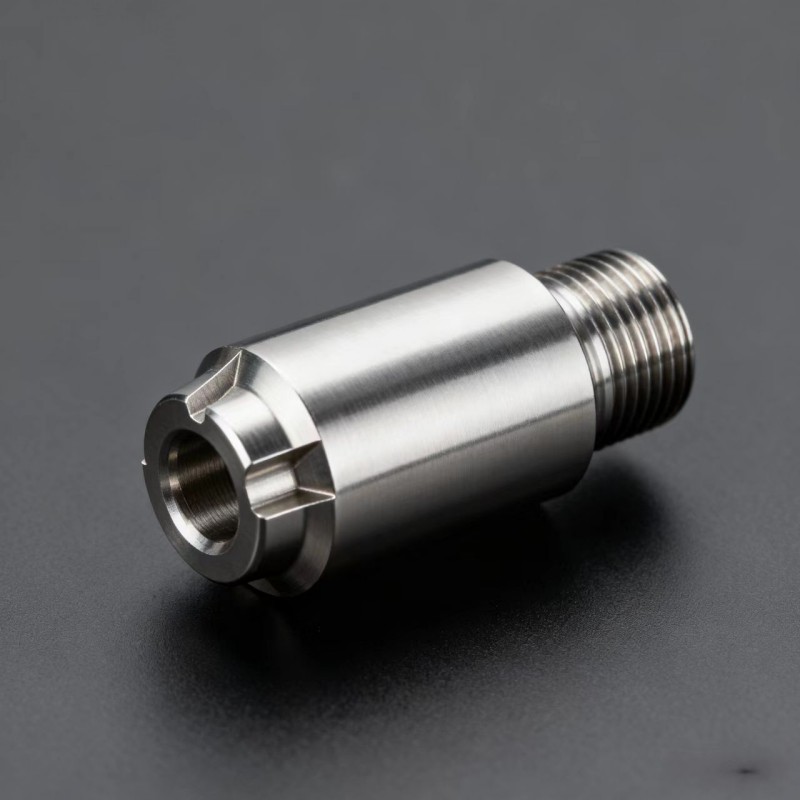
It is a core material for high-end measuring instruments, used in the manufacture of standard gauge blocks, precision balance beams, length reference standards, etc., ensuring measurement accuracy even under fluctuating ambient temperatures. In the field of optical instruments, it is used for lens and mirror support structures, ensuring the stability of the imaging system under temperature changes and improving observation accuracy.
(II) Aerospace and Defense
Used in the manufacture of spacecraft electronic control unit frames, precision components of missile guidance systems, gyroscopes, etc., ensuring dimensional accuracy in the extreme temperature difference environment of space; it can be used to make small precision components for rocket engines, adapting to high-temperature and high-stress working conditions due to its low expansion characteristics and mechanical stability. (III) Electronics and Communications
Used in electronic component housings, lead frames, high-frequency circuit connectors, etc., to solve the problem of solder joint cracking caused by thermal expansion mismatch between different materials, thereby improving the reliability of electronic products; it can also be used to manufacture devices such as resonant cavities and temperature-controlled bimetallic diaphragm frames, adapting to the needs of communication equipment and temperature regulation.
(IV) Other High-End Fields
Used as a stable framework in composite materials, improving the overall performance of composite materials through dimensional stability; used in the manufacture of core components of precision molds, ensuring the molding accuracy of plastic or metal parts, and adapting to high-end manufacturing scenarios.
VI. Key Points for Use and Maintenance
- The heating rate must be strictly controlled during processing to avoid excessive thermal stress leading to deformation. Annealing treatment must be performed promptly after cold working to stabilize dimensions and performance;
- Laser welding and other low-heat input processes should be prioritized for welding. Heat treatment must be performed after welding to prevent the deterioration of expansion performance caused by structural changes in the weld area;
- When used in humid or corrosive environments, surface coating and other protective treatments are required to prevent corrosion from affecting accuracy and service life;
- Standard heat treatment procedures must be strictly followed. Performance test samples must undergo two heat treatments according to specifications to ensure that the test data accurately reflects actual performance.