I. Product Core Definition
4J36 is a low-expansion precision alloy with 36% nickel as its core component and iron as its base metal, also known as Invar 36. "4J" represents its classification as a precision expansion alloy, and "36" corresponds to the mass fraction of nickel. Thanks to its unique composition and crystal structure, this alloy exhibits an extremely low coefficient of thermal expansion over a wide temperature range. It is a core material for ensuring dimensional stability in precision manufacturing and is widely used in high-end applications such as aerospace, electronics, and precision instruments. It corresponds to numerous international standards, including US UNS K93600/K93601, German Werkstoff Nr. 1.3912, and French Vacodil 36, and complies with standards such as YB/T 5241-2005 for chemical composition and performance indicators.
II. Core Composition and Microstructure
(I) Chemical Composition
The alloy composition is based on precise proportions, with the nickel content strictly controlled between 35% and 37%, and iron as the remainder. Strict limits are also placed on impurity elements: carbon content does not exceed 0.05%, phosphorus and sulfur are both ≤0.02%, silicon ≤0.3%, and manganese content is maintained within the range of 0.2% - 0.6%. The proportion of nickel directly determines the low expansion performance, while the precise control of components such as carbon and manganese prevents structural defects and improves processing and mechanical stability. The composition can be fine-tuned as needed for special working conditions. Some versions include small amounts of elements such as cobalt to further optimize performance and ensure material purity and stability.
(II) Microstructure
In the annealed state, 4J36 exhibits a uniform face-centered cubic (FCC) crystal structure with fine and regular grain distribution. This structure effectively suppresses thermal stress concentration, enhancing fatigue resistance and dimensional stability. Grain size significantly affects the expansion coefficient; small and uniform grains can more effectively counteract thermal expansion and contraction effects. Through the synergistic control of cold deformation and heat treatment, the crystal structure can be further optimized, reducing the expansion coefficient and improving performance stability. III. Key Performance Indicators
(I) Core Thermal Performance: Ultra-Low Expansion and Temperature Adaptability
This is the most prominent performance advantage of 4J36. It exhibits an extremely low coefficient of thermal expansion in the range of -250℃ to 200℃. In the 20℃ - 50℃ range, the coefficient is approximately 0.6×10⁻⁶/℃, and in the 20℃ - 100℃ range, it is approximately 0.8×10⁻⁶/℃. Even when heated to 200℃, the coefficient of thermal expansion is only 2.0×10⁻⁶/℃. Its Curie point is approximately 230℃; below this temperature, it is ferromagnetic and maintains its low expansion characteristics, while above this temperature, it becomes non-magnetic, and the coefficient of thermal expansion increases significantly. At the same time, the alloy maintains good strength and toughness in deep cryogenic environments, without the risk of brittle transformation, making it suitable for cryogenic storage and transportation scenarios such as liquid nitrogen and liquid hydrogen.
(II) Mechanical Properties: Balanced Strength and Ductility
The alloy exhibits balanced mechanical properties. In the annealed state, the yield strength is ≥240MPa, the tensile strength can reach 450-600MPa (typical value approximately 517MPa), the elongation is ≥30% (some specifications can reach 42%), and the hardness is low (≤200HB), possessing both sufficient load-bearing capacity and excellent formability. Cold deformation processes can significantly improve its strength, meeting the differentiated needs for mechanical properties in different scenarios. After processing, annealing treatment can restore ductility and eliminate internal stress.
(III) Processing Performance: Adaptable to Multiple Forming Processes
- Hot working: It has good thermoplasticity, with a processing temperature range of 1150℃ - 900℃. Uniform deformation can be achieved through processes such as forging and rolling. The final rolling temperature should be controlled to be no lower than 850℃, and rapid cooling methods such as water quenching should be used to prevent precipitates from affecting performance.
- Cold working: It has good cold rolling, cold drawing, and cold stamping properties, and can be processed into complex shaped parts. However, cold deformation will cause work hardening, requiring intermediate annealing at 700℃ - 750℃ to restore ductility. - Welding Performance: Low heat input processes such as TIG welding and laser welding can be used for joining. Post-weld heat treatment is required to optimize weld quality and prevent performance degradation caused by microstructural changes in the heat-affected zone.
(IV) Corrosion Resistance and Other Properties
It exhibits good corrosion resistance in dry air at room temperature, but may corrode in humid, multi-medium, and other harsh environments. Corrosion resistance can be improved through surface treatments such as coating and oxidation. Its resistivity characteristics are suitable for some electromagnetic shielding applications. Its density is approximately 8.1 - 8.2 g/cm³, its melting point can reach around 1430℃, and it possesses certain thermal and electrical conductivity.
V. Main Product Forms and Specifications
4J36 offers a full range of product forms to meet the processing needs of different applications:
- Plates: Widths can be flexibly customized, thicknesses cover thin to medium-thick plates, and the surface can be precisely ground, suitable for precision shielding covers, optical structural components, etc.;
- Tubes: Precise wall thickness control and high dimensional accuracy, specifically designed for cryogenic fluid transmission systems, gas pipelines, etc.;
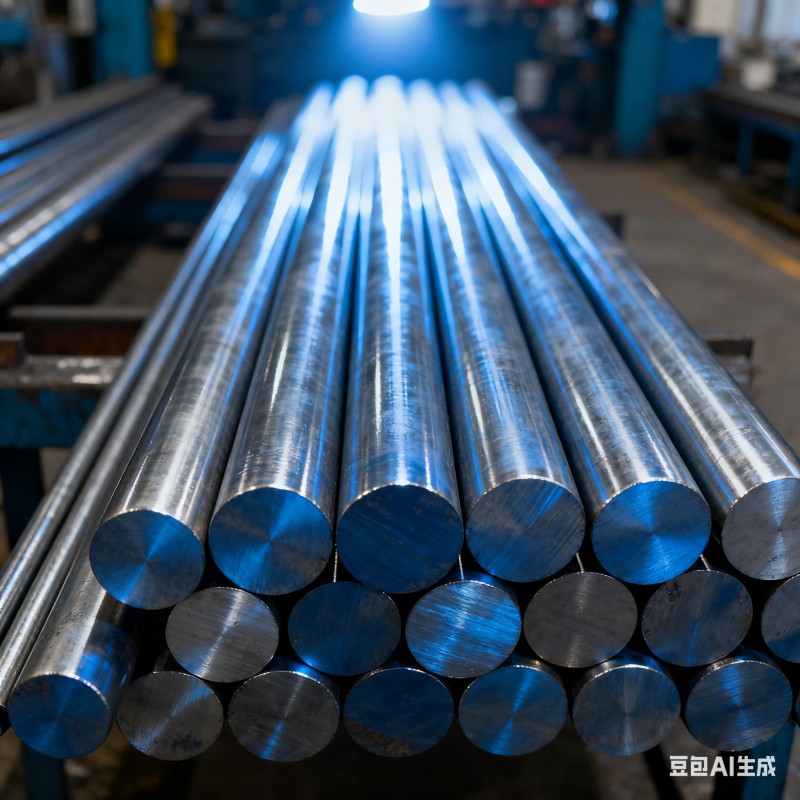
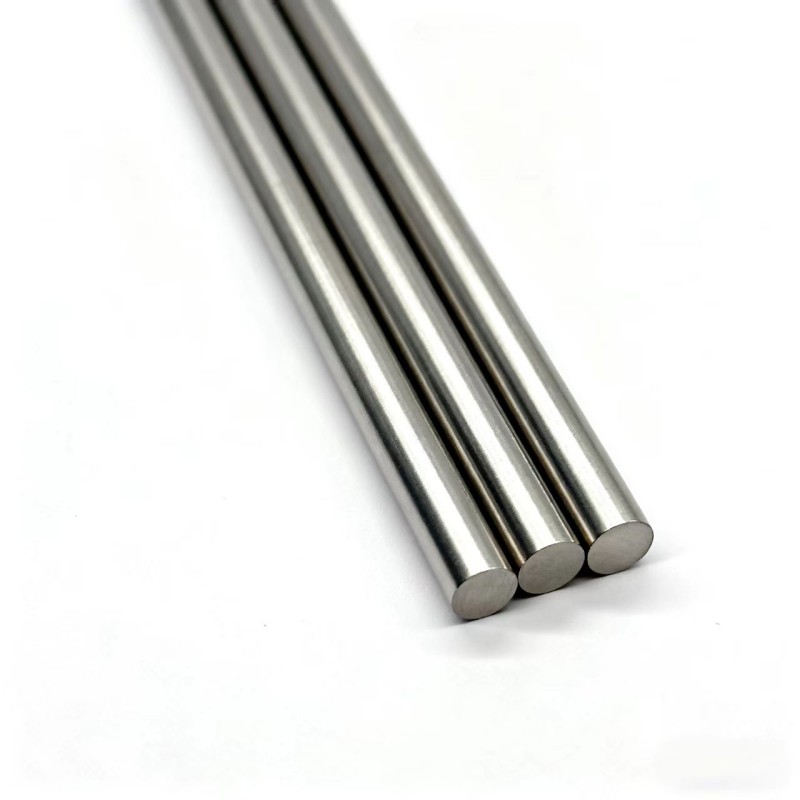
- Rods and Wires: Complete range of specifications, suitable for processing precision shafts, lead frames, and other components;
- Forgings: Large and complex shapes can be customized, suitable for heavy structural components in the aerospace field.
All products are manufactured using processes such as vacuum induction melting, precisely controlling compositional purity, combined with subsequent treatments such as homogenization annealing, to ensure performance stability and batch consistency.
VI. Typical Application Scenarios
(I) Aerospace and Defense
As a critical structural material for spacecraft, it is used in the manufacture of satellite electronic control unit frames, missile guidance system components, gyroscopes, accelerometers, etc., ensuring dimensional accuracy in extreme temperature differences in space; it can also be used to manufacture liquid hydrogen/liquid oxygen storage tanks, cryogenic pipelines, as well as combustion chambers and turbine-related components of aero engines, and is also used in rectangular waveguides for millimeter-wave and centimeter-wave communication, supporting the operation of radar and navigation systems. (II) Precision Instruments and Metrology
It is a core material for measuring instruments, used in the manufacture of standard gauge blocks, precision balance beams, length reference components, etc., ensuring that measurement accuracy is not affected by temperature fluctuations; in the field of optical instruments, it is used in lens and mirror support structures to ensure the stability of the imaging system under temperature changes.
(III) Electronics and Communications
Used in electronic component casings, lead frames, high-frequency circuit connectors, etc., to solve the problem of solder joint cracking caused by thermal expansion mismatch between different materials, improving the reliability of electronic products; it can also be used to manufacture temperature-controlled bimetallic diaphragm frames, shadow masks, and other devices to meet the needs of temperature regulation and display equipment.
(IV) Cryogenics and Energy
Widely used in storage tanks and pipelines for liquefied gas production, storage, and transportation equipment, suitable for deep cryogenic environments below -200℃; in the field of superconductivity, it can be used as a stable framework for magnets, and in the medical field, it is used in the core components of cryosurgical knives, ensuring equipment performance through its low-temperature stability.
VI. Key Points for Use and Maintenance
- During processing, the heating rate should be controlled to avoid excessive thermal stress leading to deformation. After cold working, annealing treatment should be performed promptly to stabilize dimensions and performance;
- Welding should adopt a low heat input process and be combined with post-weld heat treatment to prevent performance degradation in the weld area;
- When used in humid or corrosive environments, surface coating and other protective treatments are required to prevent corrosion from affecting accuracy and lifespan;
- The heat treatment regime should be strictly followed. Standard performance test samples should be held at 840℃±10℃ for 1 hour and then water-cooled, followed by holding at 315℃±10℃ for 1 hour and then furnace-cooled or air-cooled to ensure stable performance.